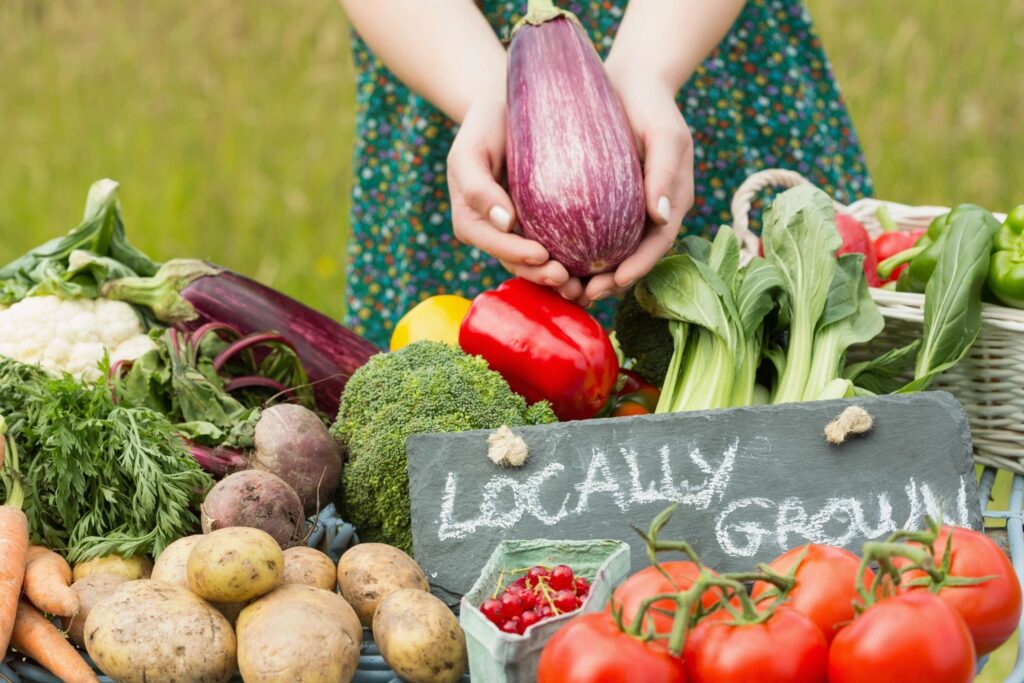
In an age of supermarkets and online grocery deliveries, farmers’ markets continue to attract shoppers looking for a more personal food experience. These markets offer direct access to local producers, seasonal ingredients, and unique products that are often unavailable through large retail chains.
Many consumers appreciate the opportunity to meet the people who grow and produce their food. This direct connection creates greater awareness about farming practices, food quality, and sustainability.
Farmers’ markets also encourage seasonal eating. Rather than expecting every fruit and vegetable year-round, shoppers become more connected to natural growing cycles and regional agriculture.
Beyond food itself, these markets often serve as community gathering spaces where local businesses, artisans, and residents interact. This social aspect adds value that extends beyond simple commerce.
As interest in sustainability and local economies grows, farmers’ markets continue to demonstrate that food can be both a product and a community experience.
HEALTH
The Benefits of Spending Time Outdoors
Many people spend most of their day indoors, moving between homes, offices, and digital environments. As a result, simple outdoor activity is receiving greater attention from health professionals.
Time spent outdoors encourages movement, fresh air, and exposure to natural light. It can also help reduce stress and improve mood.
Whether through walking, gardening, or simply sitting in a park, outdoor experiences provide a valuable contrast to indoor routines.
As lifestyles become increasingly screen-focused, reconnecting with outdoor environments may offer important benefits for both physical and mental health.
LIFESTYLE
Why People Are Rediscovering Handwritten Journals
Despite the convenience of digital technology, handwritten journals are making a quiet comeback.
Many people find that writing by hand encourages reflection and deeper engagement with thoughts and experiences.
Journaling can help organize ideas, track goals, process emotions, and record personal growth.
Unlike digital communication, handwriting often feels slower and more intentional. This can create a sense of mindfulness that is increasingly rare in modern life.
As people seek meaningful ways to disconnect from constant notifications, journaling continues to offer a simple yet effective solution.
WELLNESS
Why Rest Is a Form of Productivity
For years, productivity was often measured by constant activity. Today, many people are recognizing that rest plays an essential role in performance and well-being.
Rest allows the mind and body to recover from physical and mental demands. Without sufficient recovery, concentration, creativity, and decision-making often decline.
Quality sleep, leisure activities, and periods of relaxation contribute to long-term effectiveness far more than endless work without breaks.
As conversations around burnout continue, rest is increasingly viewed not as laziness but as a necessary component of sustainable success.
CAREER
The Importance of Professional Reputation
A professional reputation is built through daily actions rather than major achievements alone.
Reliability, integrity, communication, and consistency all contribute to how colleagues and employers perceive an individual.
In an interconnected world, reputation often influences opportunities, partnerships, and career progression.
Building a strong reputation requires time, but maintaining it requires continuous effort and professionalism.
Ultimately, professional reputation remains one of the most valuable assets any career can possess.
TRAVEL
Why Local Experiences Matter More Than Tourist Attractions
Many travelers spend months planning visits to famous landmarks, yet their most memorable experiences often come from everyday local interactions.
A conversation in a neighborhood café, a visit to a community market, or participation in a local tradition can provide deeper cultural understanding than major attractions alone.
These experiences allow travelers to see destinations through the perspective of residents rather than guidebooks.
As travel becomes increasingly accessible, many people are prioritizing authenticity and cultural immersion over traditional sightseeing.
REAL ESTATE
The Rise of Flexible Living Spaces
The modern home has evolved significantly over the past decade.
Living spaces are now expected to accommodate work, leisure, fitness, education, and social activities within the same environment.
As a result, flexible layouts have become increasingly desirable.
Homeowners and renters value spaces that can adapt to changing needs without requiring major renovations.
This trend reflects broader lifestyle shifts and highlights the growing importance of functionality in residential design.
EDUCATION
Why Curiosity Is the Foundation of Learning
Curiosity drives discovery, innovation, and intellectual growth.
Students who are encouraged to ask questions often develop stronger problem-solving skills and greater enthusiasm for learning.
Rather than viewing education solely as the transfer of information, many educators now emphasize exploration and inquiry.
Curiosity transforms learning from an obligation into an active process of discovery.
As knowledge continues expanding rapidly, curiosity may become one of the most important educational qualities of the future.
FRANKLY SPEAKING WITH FRANCA
“I Keep Comparing My Life to Everyone Else’s”
Dear Franca,
Every time I look online, it seems like everyone else is achieving more than I am. I know social media isn’t always real, but I still find myself comparing my life to others.
Franca Says:
Comparison is one of the easiest habits to develop and one of the hardest to break.
The challenge is that people often compare their everyday reality with someone else’s highlight reel.
Most people share achievements, celebrations, and milestones publicly. They rarely share uncertainty, disappointment, or setbacks with the same enthusiasm.
This creates an incomplete picture that can distort reality.
Remember that every person’s journey unfolds differently. Different backgrounds, opportunities, priorities, and circumstances shape individual paths.
Success is not a race with a universal timeline.
Instead of measuring your progress against others, consider measuring it against your own growth. Ask yourself whether you are learning, improving, and moving closer to your goals.
Because the most meaningful competition is rarely with other people.
“I Feel Like My Life Looks Better on the Outside Than It Feels on the Inside”
Dear Franca,
From the outside, everything seems fine. I have a decent career, good friends, and opportunities that many people would appreciate. Yet sometimes I feel strangely unfulfilled. I don’t understand why because, on paper, my life looks successful.
Franca Says:
This feeling is more common than many people realize.
We often spend years building a life based on what we believe should make us happy—career achievements, financial goals, social approval, and external success. Then one day we reach those milestones and discover that fulfillment cannot be measured solely by accomplishments.
There is a difference between success and alignment.
Success is often how the world measures your life.
Alignment is how your life feels when nobody else is watching.
Sometimes people become so focused on meeting expectations that they forget to ask themselves what genuinely brings them meaning, energy, and purpose.
That does not mean your achievements are unimportant. It simply means that external success and internal fulfillment are not always the same thing.
The solution is not necessarily to make dramatic changes overnight. Often it begins with honest self-reflection.
What excites you?
What drains you?
What would you pursue if nobody else’s opinion mattered?
What parts of your life feel authentic, and what parts feel performative?
These questions can be uncomfortable because they require honesty rather than appearances.
Remember, gratitude and ambition can coexist. You can appreciate what you have while still acknowledging that something feels missing.
Life is not only about building a successful résumé.
It is also about creating a life that feels meaningful when the audience disappears.
Because at the end of the day, the most important relationship you will ever have is the one with yourself.
And true success is not just having a life that looks good from the outside—it is having a life that feels right on the inside.
In an era dominated by food trends and social media-driven dining experiences, many people are rediscovering the value of traditional recipes. Across cultures, family dishes that have been passed down through generations are enjoying renewed appreciation.
Part of this revival comes from a desire for authenticity. Traditional recipes often tell stories about heritage, migration, family history, and local ingredients. They connect people not only to food but also to identity and culture.
Many home cooks are also becoming more interested in understanding where their meals come from. Rather than relying on convenience foods, they are learning cooking techniques used by parents and grandparents.
Traditional recipes often emphasize seasonal ingredients and simple preparation methods. While modern cooking offers innovation and convenience, older recipes frequently provide lessons in resourcefulness and balance.
As culinary culture continues evolving, traditional food remains a reminder that some of the most meaningful meals are those connected to history, family, and community.
HEALTH
The Importance of Hydration Beyond Summer
Hydration is often discussed during hot weather, but maintaining proper water intake is important throughout the entire year.
Water supports digestion, circulation, temperature regulation, and cognitive performance. Even mild dehydration can affect concentration, energy levels, and mood.
Many people underestimate how much fluid they need during colder months because they feel less thirsty. However, heating systems, indoor environments, and daily activity still require adequate hydration.
Simple habits such as carrying a reusable water bottle and choosing water over sugary beverages can make a meaningful difference.
Good hydration remains one of the simplest and most effective health habits available.
LIFESTYLE
Why People Are Choosing Simplicity Over Excess
Modern life often encourages constant consumption and endless upgrades. Yet many people are moving in the opposite direction by embracing simplicity.
This shift is not necessarily about owning less. Rather, it is about being intentional with possessions, commitments, and daily routines.
People increasingly value experiences, relationships, and peace of mind over accumulation.
Simplifying life can reduce stress, improve focus, and create more time for meaningful activities.
As lifestyles become increasingly complex, simplicity is emerging as a powerful form of personal freedom.
WELLNESS
Why Gratitude Remains a Powerful Daily Practice
Gratitude may sound simple, but its impact can be profound.
Taking time to recognize positive aspects of life encourages perspective and emotional balance. Gratitude does not eliminate challenges, but it can help prevent negative experiences from dominating attention.
Research and personal experience alike suggest that grateful individuals often report greater satisfaction and resilience.
Practicing gratitude can be as simple as reflecting on positive moments at the end of each day.
In a world that constantly focuses on what is missing, gratitude helps people appreciate what is already present.
CAREER
Why Curiosity Is a Professional Advantage
Curiosity is often associated with childhood, but it remains one of the most valuable professional qualities throughout adulthood.
Curious professionals ask questions, seek new knowledge, and remain open to different perspectives.
This mindset encourages innovation and adaptability. In rapidly changing industries, curiosity often leads to continuous improvement and professional growth.
Employers increasingly value individuals who demonstrate willingness to learn rather than relying solely on existing expertise.
As workplaces evolve, curiosity may become one of the defining traits of long-term career success.
TRAVEL
Why Walking Is the Best Way to Discover a City
Modern travelers often focus on famous landmarks and busy itineraries. However, walking remains one of the most rewarding ways to experience a destination.
Walking allows visitors to notice architecture, local businesses, street art, and everyday life that might otherwise go unnoticed.
It encourages spontaneous discoveries and deeper cultural connection.
Many memorable travel experiences occur not at major attractions but during unplanned moments along city streets.
For travelers seeking authentic experiences, slowing down and exploring on foot can be surprisingly rewarding.
REAL ESTATE
Why Community Is Becoming a Property Priority
Location has always been important in real estate, but community is becoming increasingly significant.
Buyers and renters are paying closer attention to neighborhood atmosphere, local amenities, safety, and social connections.
People want environments that support well-being and quality of life, not simply convenient addresses.
Strong communities often contribute to greater satisfaction and long-term property appeal.
As housing preferences evolve, community is becoming an important factor in real estate decision-making.
EDUCATION
Why Learning Never Truly Ends
Many people view education as something completed after school or university. In reality, learning continues throughout life.
New technologies, industries, and social changes require continuous adaptation and skill development.
Lifelong learning can take many forms, including reading, professional development, travel, mentorship, and personal exploration.
People who remain committed to learning often find themselves better prepared for change and new opportunities.
Education is increasingly understood not as a destination but as an ongoing journey.
FRANKLY SPEAKING WITH FRANCA
“I Feel Like I’m Always Waiting for the Perfect Time”
Dear Franca,
I keep postponing things I want to do because I’m waiting for the perfect moment. Years seem to pass and I still haven’t started.
Franca Says:
The perfect time is one of life’s most convincing illusions.
Many people delay dreams, projects, and opportunities because they believe conditions must be ideal before taking action.
The reality is that most worthwhile things begin imperfectly.
Successful people rarely start with complete certainty. They start with what they have and adjust along the way.
Waiting for perfection often creates regret because life continues moving whether we act or not.
Progress usually comes from imperfect action, not perfect planning.
Sometimes the best moment to begin is simply the moment you decide to stop waiting.
Because confidence is often built after you start—not before.
Street food remains one of the most influential parts of global food culture because it reflects authenticity, creativity, and local identity. Across major cities and smaller communities alike, street vendors continue to attract people searching for flavors that feel personal and connected to tradition.
One reason street food remains popular is accessibility. It allows people to experience regional specialties quickly and affordably while also supporting small independent businesses.
Street food also creates strong cultural connection. Many traditional recipes are passed through generations and reflect the history of local communities.
Importantly, street food culture continues evolving through fusion cuisine and modern presentation while still maintaining authenticity.
And increasingly, travelers and food enthusiasts are recognizing street food as one of the most genuine ways to experience culture through taste.
Why Learning How to Think Matters More Than Memorizing Facts
Education has changed dramatically over the past few decades. In earlier generations, success in school was often connected to memorization and repetition. Students were expected to absorb information, remember it accurately, and reproduce it during examinations. While factual knowledge remains important, the modern world increasingly demands a different kind of intelligence: the ability to think critically, adapt quickly, and solve problems independently.
Today, information is available almost instantly through technology. Facts, statistics, and explanations can be accessed within seconds from digital devices. Because of this, education is no longer only about remembering information. It is becoming more focused on understanding how to analyze, question, interpret, and apply knowledge effectively.
Critical thinking is now one of the most valuable educational skills. Students who learn how to think independently are often better prepared to navigate complex situations in professional and personal life. They are more capable of evaluating information carefully, recognizing misinformation, and making thoughtful decisions.
This shift is especially important in the digital age. Social media, online platforms, and constant information exposure have created environments where people encounter large amounts of content daily. Without critical thinking, it becomes difficult to separate reliable information from manipulation, exaggeration, or misinformation.
Modern education is also placing greater emphasis on creativity and adaptability. Employers increasingly value individuals who can communicate effectively, collaborate with others, and approach problems from multiple perspectives. Technical knowledge alone is often no longer enough.
Importantly, education should encourage curiosity rather than fear of mistakes. Some of the strongest learning happens when students ask questions, explore ideas openly, and develop confidence through experience rather than memorization alone.
There is also growing recognition that learning continues beyond classrooms and universities. Lifelong learning is becoming essential as industries evolve and new technologies reshape professional environments.
This does not mean traditional knowledge has lost importance. Foundational education still matters greatly. However, modern success increasingly depends on the ability to apply knowledge intelligently and continue learning throughout life.
And increasingly, the true value of education is being measured not simply by how much information someone remembers, but by how effectively they can think, adapt, and grow in a rapidly changing world.
Why Midnight Snacking Has Become a Lifestyle Habit
Late-night eating has become increasingly common in modern lifestyles. Whether caused by demanding schedules, streaming culture, remote work, or irregular routines, many people now find themselves eating long after traditional dinner hours.
For some, midnight snacking is connected to convenience and comfort. After busy days filled with work and responsibilities, evenings often become the first opportunity to truly relax. Food becomes associated with reward and emotional release rather than simple hunger.
Technology has also influenced this behavior. Streaming platforms, gaming, social media, and late-night digital activity encourage people to stay awake longer than previous generations. Extended wakefulness naturally increases opportunities for eating.
Importantly, late-night eating is not always unhealthy. Many people are becoming more mindful about snack choices, focusing on lighter foods and balanced portions rather than highly processed options.
Nutrition experts increasingly emphasize awareness and moderation rather than strict guilt around eating habits.
This trend reflects broader lifestyle changes where traditional schedules are becoming less rigid.
And increasingly, food habits are adapting to modern routines shaped by technology, flexibility, and changing social behavior.
FINANCE
Why Minimal Spending Challenges Are Becoming Popular
Many people are becoming more intentional about their financial habits through “minimal spending” challenges.
These challenges involve limiting unnecessary purchases for a specific period of time in order to improve savings, reduce impulse spending, and increase financial awareness.
One major reason for their popularity is growing fatigue with consumer pressure. Constant advertising and social media trends encourage endless consumption, leaving many individuals financially and emotionally overwhelmed.
Minimal spending challenges encourage people to rethink the difference between wants and needs.
Importantly, these challenges are not about deprivation.
They are often about building healthier financial habits and becoming more conscious of spending patterns.
Participants frequently report reduced financial stress and greater appreciation for simplicity.
And increasingly, financial discipline is being connected to emotional clarity and long-term stability rather than restriction alone.
HEALTH
Why Morning Sunlight Is Becoming a Wellness Trend
Morning sunlight is receiving growing attention in health and wellness conversations.
Exposure to natural light early in the day helps regulate sleep cycles, energy levels, mood, and concentration.
Modern lifestyles often involve long hours indoors under artificial lighting, reducing natural interaction with daylight.
As awareness grows, many people are intentionally spending time outside shortly after waking up.
Simple habits such as morning walks or outdoor coffee breaks are becoming part of wellness routines.
Importantly, natural light affects both physical and emotional health.
And increasingly, small daily interactions with nature are being recognized as powerful wellness tools.
LIFESTYLE
Why People Are Returning to Analog Hobbies
In highly digital environments, many individuals are rediscovering analog hobbies such as reading physical books, knitting, journaling, painting, gardening, film photography, and vinyl records.
These activities provide relief from constant screen exposure and digital overstimulation.
Analog hobbies also encourage patience and deeper focus because they often require slower, more intentional engagement.
Many people report that these hobbies feel calming and emotionally grounding.
Importantly, analog activities create experiences that feel tactile and personal in ways digital interaction sometimes lacks.
And increasingly, people are seeking balance between technological convenience and slower forms of creativity.
WELLNESS
Why Emotional Detachment Is Sometimes Necessary
Emotional connection is important, but healthy emotional detachment can also be necessary in certain situations.
Detachment does not mean becoming cold or uncaring.
It means learning not to absorb every problem, emotion, or conflict around you so deeply that it damages your own mental well-being.
Many people struggle because they feel responsible for fixing everything and everyone.
Healthy detachment creates emotional boundaries and clearer thinking.
Importantly, detachment allows compassion without emotional exhaustion.
And increasingly, emotional balance is being recognized as essential for long-term mental wellness.
CAREER
Why Personal Branding Matters More Than Ever
Professional identity is no longer shaped only by résumés and job titles.
Increasingly, personal branding plays a major role in career opportunities and visibility.
Personal branding refers to how individuals present their expertise, communication style, values, and reputation professionally.
Digital platforms have made professional visibility far more public and accessible.
Importantly, strong personal branding is built through consistency and credibility rather than self-promotion alone.
And increasingly, professional opportunities are being influenced by visibility, trust, and communication skills.
TRAVEL
Why Train Travel Is Experiencing a Revival
Train travel is becoming increasingly attractive to modern travelers seeking slower and more scenic experiences.
Unlike fast-paced air travel, trains often allow passengers to engage more fully with landscapes and the journey itself.
Many travelers appreciate the reduced stress, comfort, and environmental benefits associated with rail transportation.
Train travel also creates opportunities for reflection and uninterrupted relaxation.
Importantly, the journey becomes part of the experience rather than simply transportation.
And increasingly, travelers are valuing quality of movement as much as the destination itself.
REAL ESTATE
Why Wellness Amenities Are Influencing Property Value
Modern real estate increasingly incorporates wellness-focused features.
Gyms, green spaces, walking paths, natural lighting, quiet zones, and wellness facilities are becoming major attractions for buyers and tenants.
People now want homes and buildings that support physical and emotional well-being alongside practical living needs.
This reflects growing awareness around lifestyle quality and stress reduction.
Importantly, wellness-centered design improves daily living experience.
And increasingly, real estate value is being influenced by wellness integration as much as location alone.
RELATIONSHIPS
Why Emotional Availability Matters in Relationships
Healthy relationships depend heavily on emotional availability.
Being emotionally available means being willing to communicate openly, connect honestly, and remain emotionally present during both positive and difficult moments.
Without emotional availability, relationships often feel distant or inconsistent.
Trust and intimacy require vulnerability and openness over time.
Importantly, emotional availability strengthens communication and emotional security.
And increasingly, emotional connection is being valued more deeply than superficial compatibility alone.
FRANKLY SPEAKING WITH FRANCA
“I’m Afraid of Starting Over”
Dear Franca, I know I need change in my life, but the idea of starting over scares me completely.
Franca Says:
Starting over is uncomfortable because it forces you into uncertainty.
Even when people are unhappy, familiarity often feels safer than change.
But staying somewhere that no longer supports your growth can slowly drain your confidence and happiness over time.
New beginnings rarely feel perfectly comfortable at first.
They often come with fear, doubt, and emotional resistance.
That does not mean they are wrong.
Growth usually requires leaving behind environments, routines, or identities that no longer fit who you are becoming.
Importantly, starting over does not erase your past experience.
Everything you have learned still moves with you.
You are not beginning from nothing.
You are beginning with knowledge, perspective, and resilience you did not have before.
And sometimes the life you truly want only becomes possible after you are willing to step beyond what feels familiar.
Manage Consent
To provide the best experiences, we use technologies like cookies to store and/or access device information. Consenting to these technologies will allow us to process data such as browsing behavior or unique IDs on this site. Not consenting or withdrawing consent, may adversely affect certain features and functions.
Functional
Always active
The technical storage or access is strictly necessary for the legitimate purpose of enabling the use of a specific service explicitly requested by the subscriber or user, or for the sole purpose of carrying out the transmission of a communication over an electronic communications network.
Preferences
The technical storage or access is necessary for the legitimate purpose of storing preferences that are not requested by the subscriber or user.
Statistics
The technical storage or access that is used exclusively for statistical purposes.The technical storage or access that is used exclusively for anonymous statistical purposes. Without a subpoena, voluntary compliance on the part of your Internet Service Provider, or additional records from a third party, information stored or retrieved for this purpose alone cannot usually be used to identify you.
Marketing
The technical storage or access is required to create user profiles to send advertising, or to track the user on a website or across several websites for similar marketing purposes.