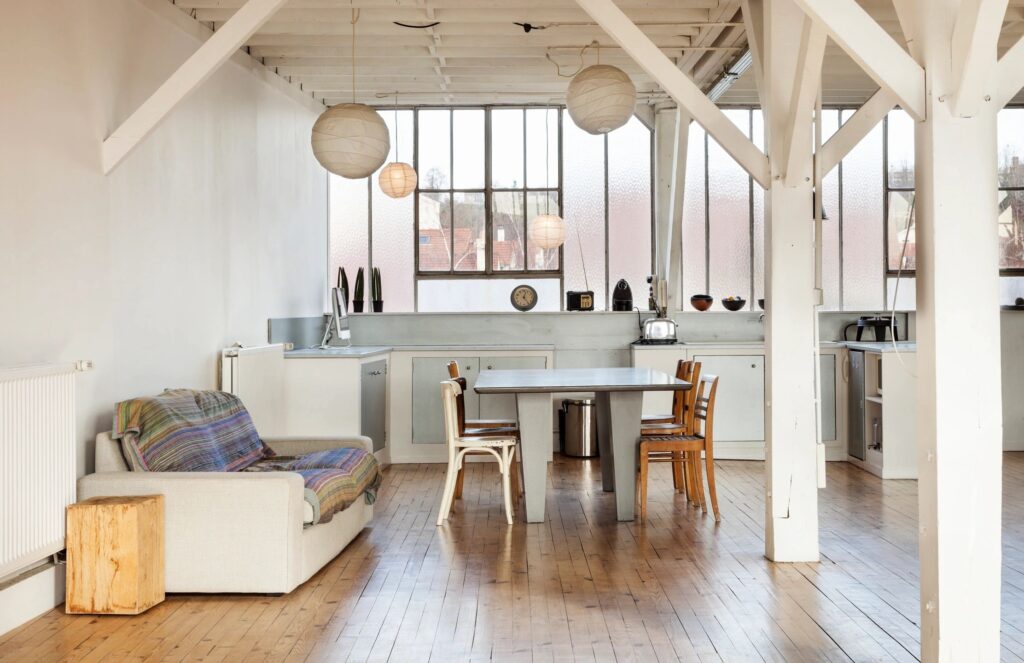
REAL ESTATE-Why Empty Properties Are Harder to Judge Than Furnished Ones

When viewing a furnished property, it’s easier to imagine living there.

Furniture gives scale, context, and warmth.

In contrast, empty properties can feel cold or smaller than they actually are.

Without reference points, it’s harder to visualise layout and usage.

This can lead to misjudgment.

A room may seem too small, when in reality it’s adequate.

Or it may seem large but poorly structured.

Understanding this helps you evaluate more accurately.

Focus on measurements, layout, and natural light rather than immediate impression.

Because perception can change — but structure remains the same.

ENTERTAINMENT-Why You Rewatch the Same Shows Instead of Trying New Ones

Many people rewatch shows they’ve already seen, even when new content is available.

This isn’t just habit — it’s comfort.

Familiar shows require less mental effort.

You already know the characters, the storyline, and the outcome.

There’s no uncertainty.

In contrast, new content requires attention.

You need to learn new details, follow new plots, and stay engaged.

When you’re tired or mentally drained, familiar content feels easier.

It’s predictable and relaxing.

This doesn’t mean rewatching is bad.

But being aware of why you do it helps you balance comfort with discovery.

Because sometimes, the easiest choice is not the most enriching one.

RELATIONSHIP-Why People Misinterpret Silence in Conversations

Silence in a conversation can feel uncomfortable.

When someone pauses or doesn’t respond immediately, it’s easy to assume something is wrong.

But silence doesn’t always mean disapproval, anger, or disinterest.

Sometimes, it means thinking.

Some people process information internally before responding.

Others need time to organise their thoughts.

The problem is assumption.

One person sees silence as neutral.

The other interprets it negatively.

This creates unnecessary tension.

Understanding communication styles reduces this issue.

Not everyone responds quickly, and not every pause is meaningful.

Sometimes, silence is just space.

And space can improve conversations, not harm them.

HEALTH-The Subtle Ways Your Body Signals That You Need Rest

Rest is often treated as optional.

Many people push through fatigue, assuming they can recover later.

But the body doesn’t always communicate exhaustion in obvious ways.

Sometimes, the signals are subtle.

Reduced focus. Increased irritability. Slower thinking. Lack of motivation.

These are not always recognised as signs of fatigue.

Instead, they’re often interpreted as lack of discipline.

But they’re signals.

Ignoring them doesn’t remove them.

It delays recovery and often makes the problem worse.

Rest is not just about sleep.

It includes mental breaks, reduced stimulation, and time away from constant activity.

Recognising these signals early allows you to respond before burnout develops.

Because rest is not a reward.

It’s a requirement.

FINANCE
Why “Looking Rich” Is Keeping People Financially Stuck

In today’s world, appearances can be expensive.

Designer clothes, luxury items, frequent upgrades — these create the image of success.

But often, that image comes at a cost.

The pressure to “look successful” leads to spending that doesn’t build actual wealth.

Money is used to maintain perception rather than create stability.

This creates a hidden problem.

From the outside, everything looks fine — even impressive.

But behind the scenes, there may be debt, lack of savings, or financial stress.

The issue is comparison.

When people measure themselves against others’ visible lifestyles, they often try to match it.

But what’s visible is only a small part of reality.

Financial progress is usually quiet.

Saving, investing, and planning don’t create immediate visual impact — but they build long-term security.

Shifting focus from appearance to stability changes everything.

Because real wealth is not about how things look.

It’s about how sustainable they are.

FOOD-Why Restaurant Food Feels “Better” — Even When It’s Not Healthier

There’s a common experience: you order a dish at a restaurant, enjoy it, and think, “Why doesn’t my cooking taste like this?”

It’s not always about skill.

Restaurants are designed to maximise flavour — often in ways you wouldn’t use at home.

One major difference is ingredient intensity. Chefs use more butter, oil, salt, and sugar than most people realise. These enhance taste quickly, making dishes richer and more satisfying in the moment.

There’s also technique.

Professional kitchens control heat precisely. High temperatures, proper timing, and experience create textures that are difficult to replicate casually.

But there’s another factor people often overlook: environment.

When you eat out, you’re not just tasting food — you’re experiencing atmosphere. Lighting, music, presentation, and social context all influence perception.

You’re more relaxed, more present, and more focused on the experience.

That combination enhances how the food feels.

At home, meals are often rushed or distracted.

The interesting takeaway is this: improving your meals doesn’t always require more complex cooking.

Sometimes, it’s about slowing down, presenting food better, and creating a more intentional eating experience.

Because taste is not just physical.

It’s psychological.

FRANKLY SPEAKING WITH FRANCA

Q: I feel like I’m doing what I’m supposed to do in life, but I’m not actually happy. Why is that?

Franca’s Answer: That’s a powerful question — and it’s more common than people admit.

Sometimes, you can follow all the expected steps — education, work, responsibilities — and still feel something is missing.

The reason is simple, but not always easy to accept: doing what is expected is not the same as doing what is aligned with you.

From a young age, most people are guided toward certain paths. Study this. Work here. Achieve that. These directions are often practical and well-intentioned.

But they don’t always take into account what genuinely interests or fulfills you.

So you move forward, doing the “right” things, but without asking whether those things actually fit you.

Over time, that creates a quiet disconnect.

You’re progressing externally, but internally, something feels off.

The first step is awareness.

Instead of asking “What should I be doing?” start asking “What actually matters to me?”

That question can feel uncomfortable because it doesn’t always have an immediate answer.

But it’s important.

Next, look at your daily life. What parts feel energising? What parts feel draining?

These patterns give you clues.

Happiness is rarely about one big change. It’s about alignment in small, consistent ways.

You don’t need to completely restart your life.

But you may need to adjust parts of it.

Introduce things that reflect your interests. Reduce things that feel forced or misaligned where possible.

Also, be careful with comparison.

Many people who seem “happy” are simply good at presenting it. You don’t see their full reality.

Finally, understand this:

It’s okay to question your path.

It doesn’t mean you’ve failed. It means you’re becoming more aware.

And that awareness is where real change begins.

REAL ESTATE-Why Location Still Matters More Than Property Features

A property can be renovated.

Layout can be changed.

Design can be improved.

But location remains constant.

Access to transport, safety, nearby services, and future development all affect value and livability.

A well-designed property in a poor location may struggle long-term.

A simple property in a strong location often improves over time.

This is why location remains one of the most important factors in real estate decisions.

Because while properties can change, location does not.

INSPIRATION-Why Waiting for the “Right Time” Often Leads to No Action

Many decisions are delayed with the same thought:

“I’ll start when the time is right.”

But the “right time” is rarely clear.

Conditions are never perfect.

Waiting often becomes a form of avoidance.

It feels responsible, but it delays action indefinitely.

Starting before you feel fully ready creates momentum.

And momentum creates clarity.

Because action reveals what planning cannot.

WELLNESS-Why Changing Your Environment Can Instantly Improve Your Mood

Sometimes, a simple change in environment can shift how you feel.

A walk outside, a different room, or even rearranging a space can create a noticeable difference.

This happens because your surroundings influence your mental state.

Familiar environments can reinforce existing moods.

Changing them interrupts that pattern.

New environments create new input — different sights, sounds, and perspectives.

This refreshes attention and can reduce stress.

It’s a simple but effective reset.

Because sometimes, the fastest way to change how you feel is to change where you are.